
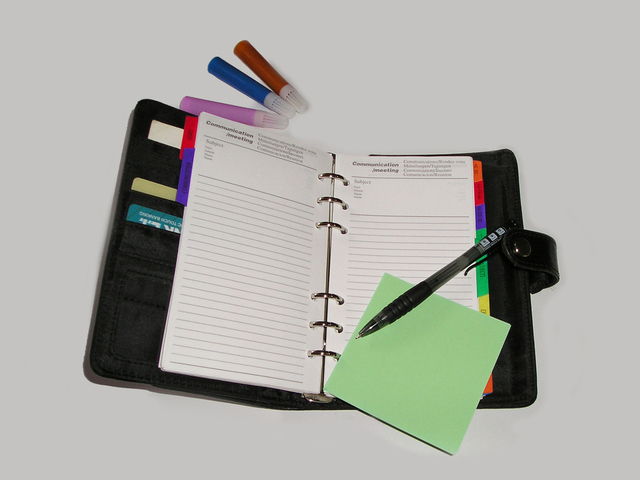
Have you started thinking about the new year? It’s coming quickly, isn’t it? It’s hard to believe that in just a couple of days it will be the year 2017. I have started thinking about some specific goals that I have for the new year. Some folks have been contemplating organization. Judyth shared the two suggestions she has for organizing for the new year, which I am sharing with permission.
Two Simple Ways To Get Ready For 2017
Now that 2016 is ending, you may be thinking about how to clean and organize for the new year.
While, of course, you could simply sweep through the house, put things where they belong, clean and wash, and make everything look good in a day, you could take it a step further. You could put systems in place to maintain a higher level of personal organization in 2017.
Imagine how the year ahead would look if you did more than just have a clean home, but also managed to get all your finances organized, too.
Let’s take a look at how to take some practical steps to keep your finances and your home organized all through the new year:
Organize Your Finances
Step 1: Reduce your expenses.
Are you paying too much for things that you could buy cheaper? Do you buy things that you don’t need at all? Let’s take a look at some examples of how you could cut costs without reducing your quality of life.
Example 1: Recurring expenses
You may feel that you don’t have much choice when it comes to recurring expenses. However, this is not always true. Take electricity, for instance. You might live in an area where you could compare competitive energy rates like Dallas. Dallas electricity, if you happen to live in the Dallas area, isn’t one flat rate. You can review a variety of plans from different companies, making it convenient to choose the best plan for your home.
Example 2: Entertainment expenses.
Instead of going out to dinner and the movies a few time a month, you could make your own dinner at half the cost and get a subscription to a video service that offers you some top-rated movies. Instead of paying to see one or two movies at a theater, you could spend the same amount of money to watch as many as you want from the comfort of your own home.
In both these examples, you’re not depriving yourself of something you need while you’re still saving money.
Step #2: Create a budget.
If you don’t have a budget, you should think about creating one because you’re probably spending more money than you realize. Budgeting doesn’t mean doing without. It’s not about deprivation. It just means balancing out all your expenses so that you can live within your means.
One of the easiest ways of creating a budget is to use financial software. Simple software can make it easier to keep track of your income and expenses. When you know where your money is going, it’s easier to figure out how to spend it wisely and avoid financial problems when bills are due. And, of course, you’ll be able to save some money for emergencies, too.
Step #3: Handle bills with finesse.
Here are some tips on handling bills:
· You should keep all your bills in one place. This prevents you from forgetting to pay bills, from losing bills, or from getting fined late fees. Keep a folder on your computer to file away electronic bills and scanned paper bills. Also keep a folder to manage your paper-based bills.
· Pay your bills on the same day you get them. If you can’t pay at the time, then set up a list of when you can pay each bill.
· Set up an automatic bill paying system. Do this only if you feel comfortable with the idea of covering every bill the minute it comes in.
Step #4: Open up two bank accounts.
If you have trouble balancing your budget, keeping track of money going out and money coming in, then you can simplify the whole process by opening up two bank accounts. Use one bank account as a cash-flow type of account, where you handle your daily expenses from eating out to putting gas in the car. Use the other one for your fixed expenses. By not commingling variable expenses with fixed expenses, you won’t run into trouble and not have enough money in your account when you have to pay a fixed bill.
Organize your Home
Step #1: Declutter
The quickest and easiest way to keep your house organized is to get rid of everything that you no longer like or that no longer serves a purpose. Declutter each room of the house, pull out everything from drawers and closets and start getting rid of things you don’t need any more. It’s better to do this chore with others as it will prevent you from getting overwhelmed and you can move at a fast clip. Give away stuff to goodwill, recycle what you can, or dump things that can’t be given away or recycled.
Step #2: Clean your house.
After you’ve spent a day or two completely cleaning your house from top to bottom, you should work out a weekly system for keeping it clean.
Step #3. Reduce your carbon footprint.
You can have a green home without investing in solar panels or driving a hybrid car by taking some simple measures:
· Turn the lights off after you leave a room, and turn the television and the air conditioner off when you leave the house.
· At nights, turn the heater down when you go to bed. The recommended temperature is 55 degrees.
· Use low flow showerheads.
· Use energy efficient light bulbs.
The new year brings new opportunities. By organizing everything before it starts, you’re ready to take full advantage of them all.
Some posts on this site contain an affiliate link. Affiliate links are used in an attempt to offset the operational costs incurred by running this website. Clicking on an affiliate link does not increase the cost of the product if you buy it. It does mean that I MAY make a commission if you purchase the item. As an Amazon Associate I earn from qualifying purchases.

I try to do everything except the different b asking accounts–quite frankly the monthly service fees to me are exorbitantly high and keeping two minimum balances to avail myself of better rates beyond my budget. Banking is a big expense.