
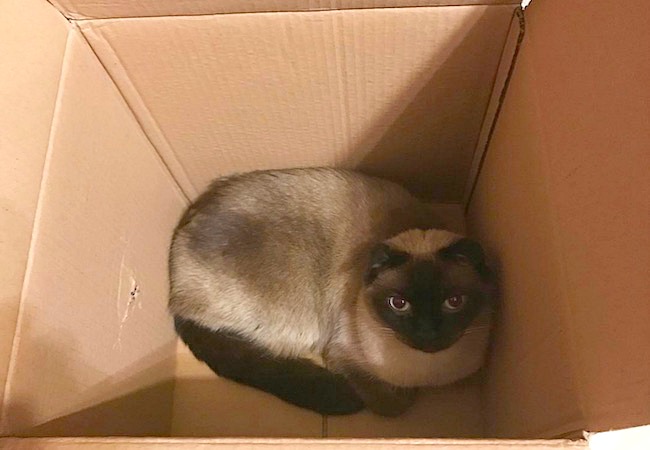
As people we all have different views on things. It doesn’t matter whether it’s politics, children, pets or food, we’re all different. Take cats, for example. Our cat Jules loves to sit in boxes. If there is a box he will try to get in it and check it out. While I don’t view that as an undesirable behavior and allow and even encourage it, someone else might think differently. Felicia shared her thoughts on four behaviors commonly seen in many household pets, which I am sharing with you with permission.
4 Crazy Things Pets Do (and How to Curb the Behavior)
Any pet owner will tell you their furry friend is a beloved part of the family. Even though we come from different species, people can connect with animals in profound ways. But that doesn’t mean we always understand all the crazy things they do.
Pets tend to get themselves into a lot of predicaments, especially when they’re young. As they grow older they can also develop peculiar behaviors that can be amusing, but more often it grows kind of annoying. Keep reading to discover the reasons behind some of the crazy things pets do and how to curb undesirable behavior.
Rolling Around in the Garden
That beautifully tilled fresh soil in the garden is sometimes too tempting for dogs to resist. If your pooch likes to dig they’ll make a beeline straight for the garden every time. The variety of scents coming from the garden may also attract your dog’s attention. Before you know it they’re rolling around crushing your seedlings.
Rolling around in the garden doesn’t just destroy your fledgling veggies. It can also expose your dog to a variety of insects. When they start scratching on a regular basis you know it’s time to call a local pest control company to help handle the situation. In addition to using a flea collar and shampoos, you’ve got to address the problem out in the yard. If not, the situation could quickly move from being an outdoor problem to an issue indoors.
You can also take steps to keep them from getting back into the garden. Applying a mixture of powdered mustard and crushed dried peppers can keep dogs away since the smell is unappealing. You can also create a barrier using thorned plants or a manmade flowerbed.
Playing in Boxes
Put a cardboard box on the floor (doesn’t matter what the size is), and within minutes your cat will probably begin to circle around it curiously. It’s a phenomenon that affects virtually every cat. They seem to be instinctively drawn to boxes.
Animal specialists say it may actually be instincts at work. The box provides an enclosed hiding space that makes cats feel safe, and it can also block out distractions while they’re trying to sleep. While the reasoning may still be unclear, research has proven that boxes provide psychological benefits for cats. Researchers at Utecht University in the Netherlands discovered that shelter cats with boxes to climb in had lower stress levels.
Instead of trying to curb this behavior it could actually be beneficial to let your kitty have a box or two to crawl into.
Going Crazy at Night
If you’ve ever owned a cat there’s a good chance you have experienced a crazy midnight escapade in person. Out of nowhere, your cat begins tearing through house running full-speed ahead and knocking down everything in its path. This is usually followed by fevered leaping and the occasional howl.
It’s not uncommon for cats to sleep long hours during the day and become more active at night. There are many theories for the “midnight crazies”. One of the most accepted theories is the crazy antics are based on their past hunting behavior. Cats were domesticated to catch rats, which typically come out at night. The “crazies” is nothing more than your cat playing predatory games.
It may be fun and games for your cat, but having them running through the house at night can disrupt your sleep among many other things. When you first get a cat it’s important to stock up on essential kitten supplies. Try to shift their playtime to a more reasonable hour by interacting with them more during the day using their favorite toys. Feeding them a big meal right before bedtime can also help your cat settle down for the night.
Using the Bathroom in One Spot
Even potty-trained dogs can have an accident every once in a while. When it happens you may notice that they always go in the same spot. It could be happening in a particular room or corner, but peeing indoors doesn’t always signal a lack of bladder control.
If your dog suddenly starts marking the same spot it could be a sign of stress. Peeing is also a way for dogs to mark their territory. When your environment changes or a new animal is brought into a home this could be a way for your dog to “claim” the space as their own.
The first step to curbing this crazy behavior is to focus on what’s caused your dog to pee indoors. If you are giving them ample time outdoors then the problem is likely due to some sort of stressor. Smell can also play a role. Do your best to completely disinfect the area with an enzyme cleaner when they use the bathroom inside to prevent them from being tempted to do it again.
Some posts on this site contain an affiliate link. Affiliate links are used in an attempt to offset the operational costs incurred by running this website. Clicking on an affiliate link does not increase the cost of the product if you buy it. It does mean that I MAY make a commission if you purchase the item. As an Amazon Associate I earn from qualifying purchases.
