
This is a sponsored post. Please note that, as always, any personal opinions reflected in this post are my own and have not been influenced in any way.
I’ve seen a number of people die in my life. By seen, I mean that I knew or knew of the people. I don’t mean that I actually watched them all die. I have only been present for that on one occasion – my mother-in-law. My mother-in-law’s final months were like nothing I’d ever experienced before. She had a cancer and didn’t want to spend her final time in hospitals. So, she went into a hospice program.
My mother-in-law wasn’t alone in her wishes. According to a Time/CNN Poll, 7 in 10 Americans said they would prefer to die at home. Twenty-five percent actually do, according to the Centers for Disease Control. A recent national survey found that respondents agreed that expertise in keeping a terminally-ill patient comfortable is the most important consideration at end of life. This is the essence of hospice care.
So what is hospice? Hospice provides specialized care for people facing a life-limiting illness through a team-oriented approach. The care includes expert medical care, pain management and emotional support for patients and their families. One goal of hospice care is to enable the patient to live life to the fullest with dignity regardless of how much time remains.
I had no personal experience with hospice care before my mother-in-law, and very little knowledge of it. But I’d heard some of the myths.
One of the great myths of hospice is that patients are lying in a bed, barely conscious. When a patient is admitted at an appropriate time, hospice can improve his or her quality of life. Nearly three-fourths of family caregivers agree that hospice care is best for a terminally ill patient. Of this group, 69 percent believe that hospice makes a better impact on the patient’s family as well.
Another hospice myth is that families lose control over what happens to their loved ones. The facts are that a family is generally able to choose their preferred hospice provider and can be trained to serve as a primary caregiver, with a specialist to provide support when needed. It is the unique nature of hospice that allows family to play a vital role in the patient’s care – creating more moments of life before a life is over. It is the quality of these final moments that can define a “good death.”
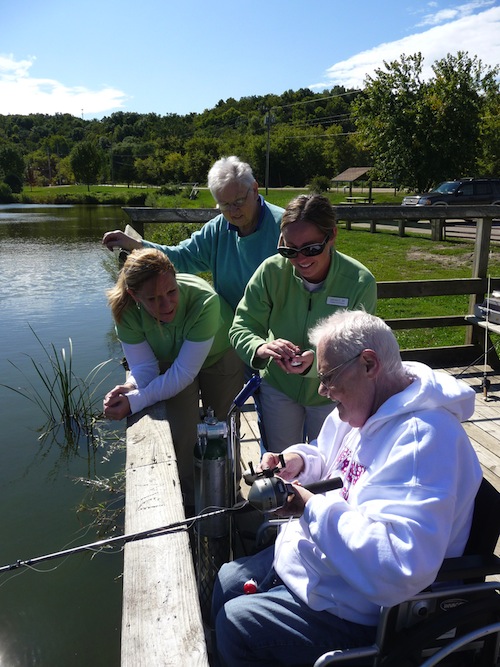
And what makes a “good death? For most people, a good death means being physically comfortable, at peace in your own home, enjoying as many moments as possible with loved ones doing the things you love to do up until the very end.
I like to think that my mother-in-law was happy with her last few months. I don’t mean happy with the pain or sickness, but rather, happy with her surroundings. She remained at my sister-in-law’s house, surrounded by loved ones and some terrific care providers. I believe that dying on her own terms, having the ability to end things her way, was the best thing for her. When the time came she wasn’t alone in a cold room, she was at home. When her caregivers knew her final moments were approaching rapidly they made sure all family members knew. Every one of the five children made it there in time. She even waited for us to arrive from New Jersey before she let go. While it was sad in many ways, it was also so touching because she was completely surrounded by people that loved her.
To join the national conversation on how to make more meaningful moments possible, find a hospice, or learn more about what hospice is all about…visit MomentsofLife.org.
Some posts on this site contain an affiliate link. Affiliate links are used in an attempt to offset the operational costs incurred by running this website. Clicking on an affiliate link does not increase the cost of the product if you buy it. It does mean that I MAY make a commission if you purchase the item. As an Amazon Associate I earn from qualifying purchases.

family support helps the sick always.
I haven’t any personal knowledge of hospice care, but I have known a few hospice care givers that would go to their homes to care for the ill. I think it’s a wonder organization and that of one that will be around for a long time.
My dad was supposed to be transferred from the hospital back home hospice care, but he never made it. His breathing changed dramatically and we were called back to the hospital (we had left to let hospice into my moms house to set up the bed and other supplies) and he died about 12 hours later.
Thank you so much for such a personal post on a sensitive subject. I think the service that hospice provides is wonderful and so needed. It’s much better than a nursing home or extended care in a hospital.
Unfortunately my husband is about to face this with his father. His father has already decided on how he wants to live the remaining days. Have to ask, does hospice also help the family adjust? I don’t think the kids are ready to accept their father’s fate as easily as their father does.
That myth is so true. When someone hears ‘hospice’ they automatically, me included, assume that someone is about to pass and are barely conscious. I am a BIG believer of, take someone out of the hospital and allow them to ‘heal’ or try to heal at home.