

Did you ever notice that many different types of doctors check your eyes when you see them, not just eye doctors? Some consider the eyes the window to the soul. Doctors consider the eyes one of the best places to diagnose health, as well as eye, conditions. Not long ago I was offered the opportunity to try a new type of supplemental eye exam, the Optos Optomap. As a person with bad vision and a family history of vision issues I was curious to learn more and accepted the offer.
The Optomap was developed by the father of a five year old child that went blind in one eye due to an undiagnosed retinal detachment. The Optomap exam is administered in addition to your regular eye exam. Wondering what the difference between the two exams is? A regular eye exam provides a look at the front your eye, allowing the doctor to evaluate health and prescription changes. The Optomap exam provides an ultra-widefield view of the retina (the back of the eye), so the doctor can detect signs of diseases including glaucoma, diabetes, macular degeneration, hypertension, leukemia and even some cancers.
People may not like the idea of a secondary exam just for eye health but consider the following statistics from *Vision 2020: The Right to Sight, Global Blindness Facts.
- Every five seconds one person in the world goes blind. A child goes blind every minute.*
- 80% of blindness is avoidable (60% treatable, 20% preventable).*
- People over the age of 65 have a 30% chance of developing age-related macular degeneration. It is the leading cause of blindness for those aged 65 and older.*
- Blindness is the number one complication of people with diabetes.**
- More than 1.1 million Americans are legally blind. An additional 50,000 people lose their sight each year.**
- Approximately 2.2 million Americans over 40 years old have glaucoma, yet more than half are unaware they have this disease until their sight is compromised.**

I had the Optos Optomap exam on both of my eyes. As it turns out one of the nearby doctors offering this exciting, valuable new exam was related to my favorite doctor in the world, my ob/gyn. I was delighted to find that she was pleasant, knowledgeable and gentle.
The Optomap exam is quick, easy and painless. And best of all, it doesn’t require dilation! I know I’m not the only one that is not a fan of having their eyes dilated, right?To take the exam you just lean towards the machine and look into the opening. You only need to look into the opening, without blinking of course, for a few seconds. That’s it. Then you do the other eye in the same way.
These are my Optomap images, first the left eye then the right.
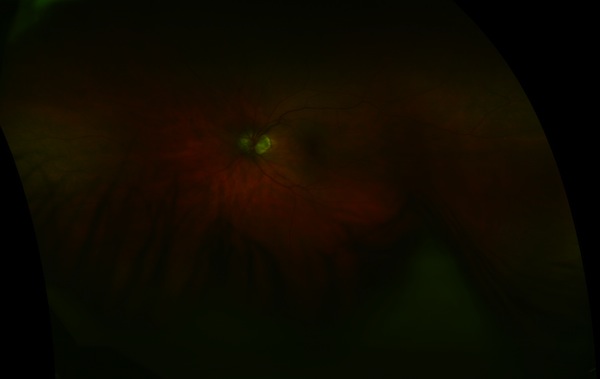

The Optomap images showed my eyes to be healthy. I think they’re pretty neat looking. I found this inexpensive test ($20-$30) to be worth the knowledge and insight that it offered.
The product featured was provided free of cost to me for the sole purpose of product testing and review. This post has not been monetarily compensated and is based on the views and opinions of my family and/or self. Please note that the opinions reflected in this post have not been influenced by the sponsor in any way.
